
About
A small team in the heart of Napa.
Garments and leather goods shaped by workwear, family, and Italian roots.
Charles Rovegno came to Napa County from Italy in 1892.
He ran a wood business in Dry Creek. In January 1902 he bought a lot in Yountville and moved there. For more than forty years he worked as a vineyardist in the valley: steady, ordinary work, the kind that fills a life without making a story of it.
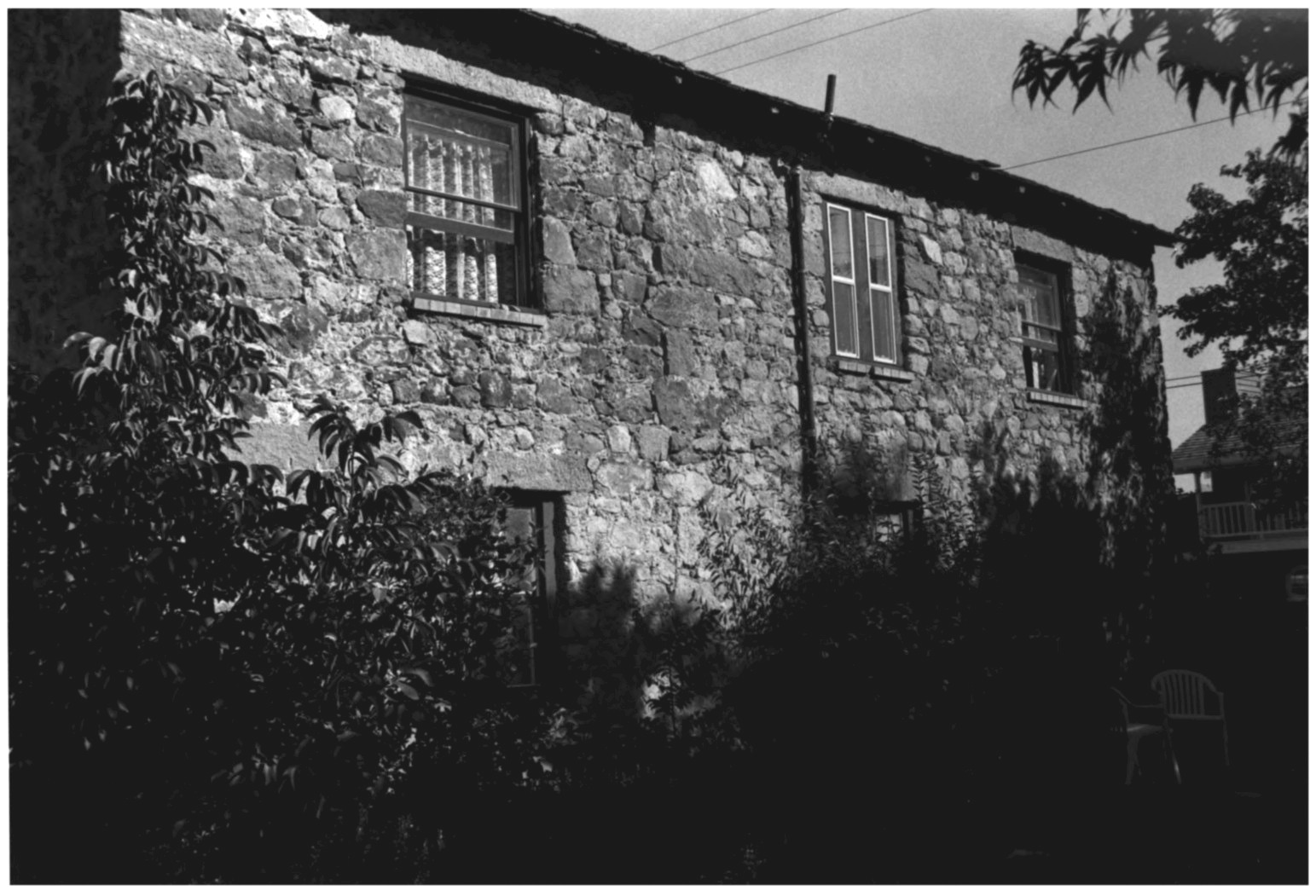
On that lot, from 1903 to 1908, a stone house went up. He lived in it for the rest of his life. He died there in April 1954, at 83, and the Napa Register put the news on its front page.
We take his name.
It was built of stone gathered and quarried nearby, in Yountville.
Rovegno commissioned it. The mason was Angelo Brovelli, a local man who also built many of the stone bridges in Napa County.
Napa stonework came in two kinds. Architects drew the first: regular courses of cut, rectangular stone, for homes, large wineries and public buildings. Builders worked out the second themselves: rough-cut and uncut stone of every size, laid in irregular courses, for warehouses, farm buildings and shops. The Rovegno house is the second kind.
Inside, in 1990, the walls were still bare stone, with heavy wood lintels over the windows, a beaded wood ceiling in the main room, and round log joists beside the stairs.
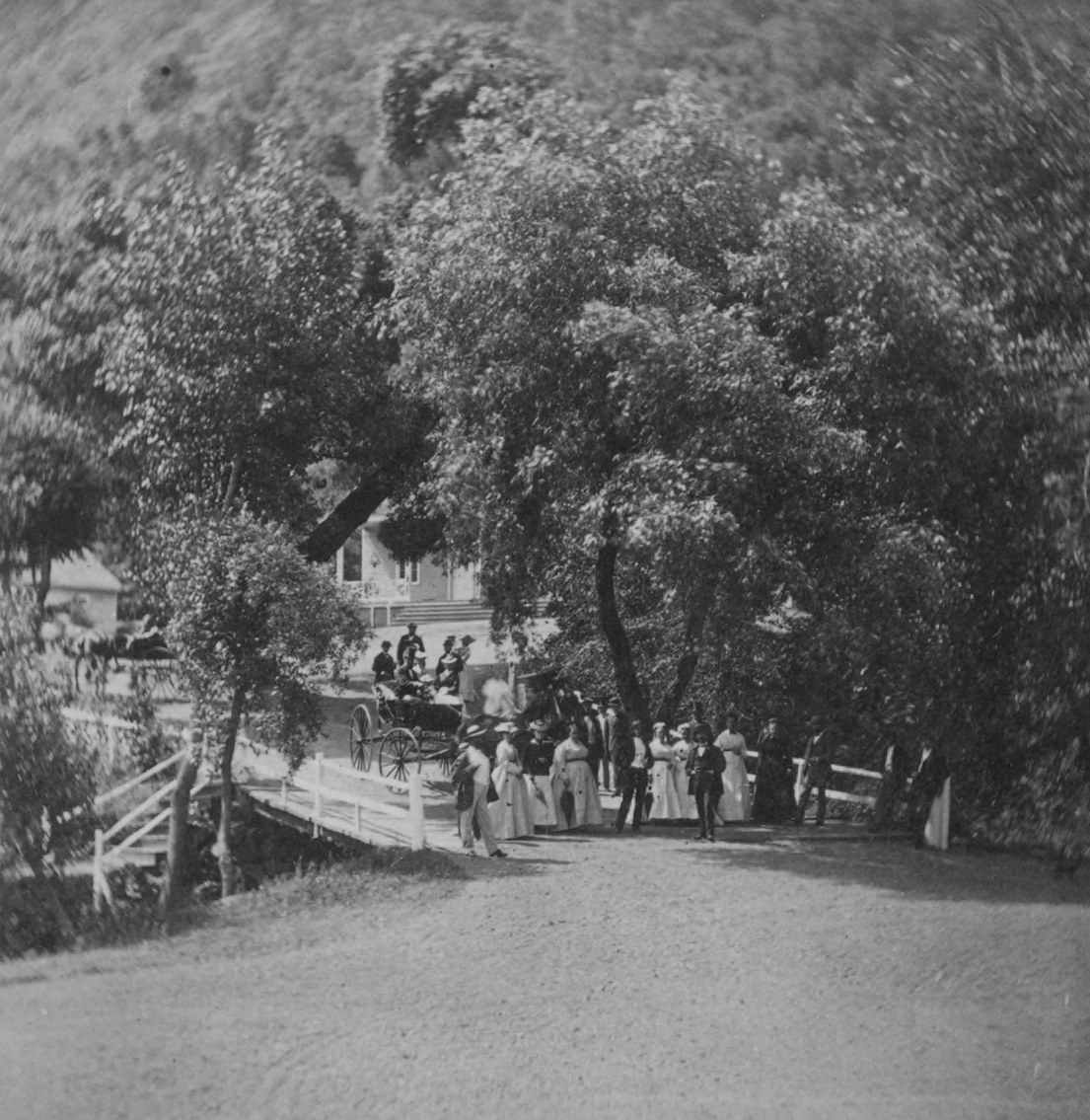
Many of the valley's early settlers came from rural Europe, where building in stone was ordinary.
Some were trained masons. Between about 1874 and 1912, Italians and Swiss Italians especially brought the craft to Napa, and built with what was at hand: fieldstone cleared from farms, and rock quarried in the hills east of the valley.
The stone helped. An 1878 history of the county described a light yellow volcanic rock, soft enough to shape with an axe when first quarried, and harder after time in the open air. Wineries built from it stayed cool.
The same hands built houses, wineries, milk sheds, walls, schools and libraries. They built bridges too. Timber ran short early in the county, and it was full of small creeks that a short span could cross, so by the turn of the century Napa was known as the county of the stone bridges.
On St. Helena's Main Street, many of the early buildings were wood.
A city history of the district says that in the 1870s and 1880s brick and stone buildings gradually replaced the wood-frame ones, and that few of the old frame buildings survived the fires that periodically swept through the commercial district.
In October 1870, two fires in St. Helena and one in Calistoga ran together and crossed the Mayacamas Mountains into Sonoma Valley. A newspaper of the day called it one of the most extensive and destructive fires on record. In 1901 a fire took almost all of Calistoga's downtown. In September 1913 a fire that began in Chiles Valley burned thirty-five farms across the county, and the St. Helena Star called it the worst in the history of Napa County.
By the 1890s, the same history says, Main Street was fixed in stone and brick.
We keep our collections small and release them slowly, so each piece gets the attention it needs. Ryan Ranch is our first collection, exploring that world. Familiar shapes, worn with ease.